8.30 – 9.30 Registration / coffee-tea
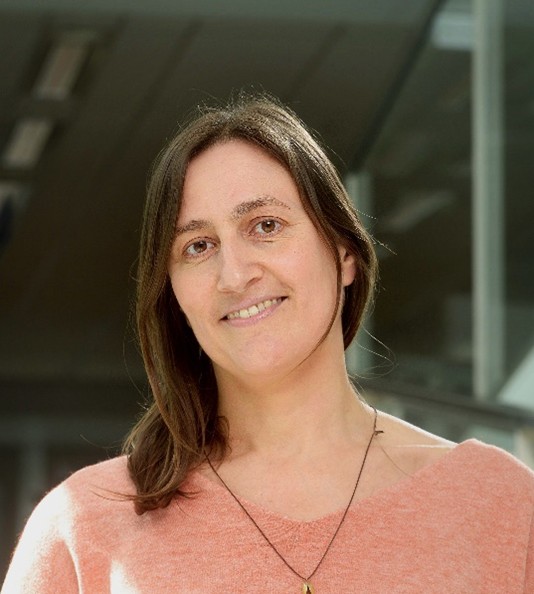
Rosalie Metze works as Associate Professor Mental Health & Wellbeing at Windesheim University of Applied Sciences in The Netherlands. She has a background in social work and sociology. In her career she has focused on topics such as inclusion, experiential knowledge and expertise, recovery-oriented care, mental health care, and the social work domain. The research group Mental Health & Wellbeing mainly works according to the principles of Participatory Action Research (PAR) and arts-based research. In our research we always strive to include ‘silent voices’ and work towards epistemic justice.
Jean Pierre Wilken is is emeritus professor at Utrecht University of Applied Sciences, Netherlands and president of the international CARe Network for recovery and social inclusion. He coordinates the Erasmus+ project Mental Health Care Recovery Education.
Pavel Říčan is director of the Centre for Mental Health Care Development in Prague and general coordinator of The CARe Network.
Jan Pfeiffer is a consultant psychiatrist, trainer, supervisor, human rights defender and a key figure in mental health reforms in the Czech Republic and beyond. His initiatives shaped the landscape of mental health care since the 1990s: first services in community, efficient multidisciplinary teamwork, deinstitutionalisation and rights of people with disabilities.
In his opening speech he will focus on values in mental health care and important aspects of cooperation between more and less developed countries.
Michal Kašpar is a passionate defender of mutual support among people with special experiences who often receive psychiatric diagnoses. He studied journalism and later was trained as a peer specialist. He has been systematically educating himself in collaborative and dialogical practice. Michal is used to telling life stories, both through his songs and in his peer work. He currently works as a recovery guide at the Recovery House in Prague. He was involved in the creation of the peer YouTube channel Studio 27 and several self-help groups, especially the GPS group. At the conference, he will speak about sharing experiences in horizontal, non-hierarchical groups.

Mike Slade is Professor of Mental Health Recovery and Social Inclusion at the University of Nottingham, United Kingdom. Mike is one of the worlds leading scientists in the field of recovery research. His main research interests are recovery-focused and outcome-focused mental health services, including Recovery Colleges and lived experience narratives. The title of his lecture will be Recovery as transformation: culturally informed approaches to meeting local challenges.
11.00 – 11.30 coffee/tea/water break
WORKSHOPS AND ORAL PRESENTATIONS
No pre-registration is needed for the workshops
11.30 – 12.45 1st round of parallel sessions
This workshop has two parts. The first part is about the book Recovery as a journey. This is a recently published book in Dutch which translates principles of the CARe approach into forms of self-help. In The Netherlands we are currently developing a course manual based on the book. If this is useful for other countries, we might translate the book and the manual in the future, and organise trainings for facilitators.
Humans in recovery have often experience and traumatic situations. In situations where you feel unsafe, your body reacts as a a trigger and you may experience fear or panic. Actually, this is a very normal physical reaction to danger, even if there is no real threat. We will share one example from the book which is aimed at becoming stronger using the five senses.
The second part is about the initiative Recovery Angels. We will explain the why and how of the recovery angels. The basic way of working is to just listen as friends to people in disruptive situations or their relatives, people who are often abandoned by the mental health or social system. We will talk about the origins and give examples. Besides that, we will discuss with you about how everybody can be an (recovery) angel.
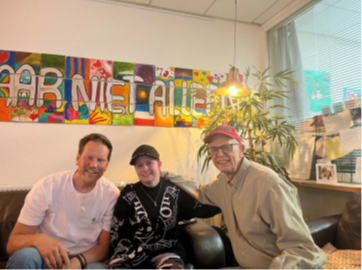
Jurry Smit is tall, dad, sporty, almost 50, expert by experience, social work, health psychologist (in training)
Dirk den Hollander is grandfather, fireplace guitarist, pensioner (72), co-developer CARe approach, social pedagogue, co developer Recovery Angels and Recovery Learning Centre Nei Skoen Helmond, Netherlands
Nicole Jacobs is a happy biker girl (42), proud pet owner, funny and colourful, expert by experience (associate degree), co-developer Recovery Angels
This workshop shows how working in the neighbourhood can support recovery. It helps to share information, start open conversations, and reduce stigma around mental health vulnerability. The focus is on working together with outreach workers, community organizations, and mental health professionals as equal partners. Participants will experience how being close, working in an equal way, and speaking openly about moments of not knowing or feeling powerless can help unblock difficult situations and connect different perspectives.
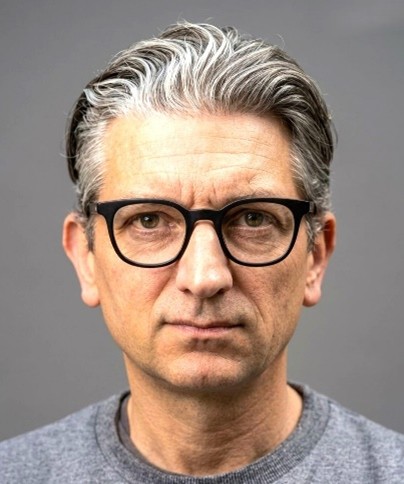
Wim Haeck is a community mental health worker in Ghent, Belgium, active in the neighbourhoods of Sint-Amandsberg. With more than 30 years of experience in mental health care, he has worked extensively with people living with psychosis and complex vulnerabilities, focusing on recovery-oriented and community-based support. His work centers on building connections between residents, care providers, and local organizations to strengthen inclusion, resilience, and mental wellbeing in the community.
Session 1.3 Oral presentations (Main hall, capacity – unlimited)
Since 2006, Denmark has undertaken a systematic transformation of mental health practices toward recovery-oriented rehabilitation (ROR), initially through the implementation of the CARe model in Aarhus Municipality. This evidence-based approach has demonstrated significant outcomes in supporting individuals recovery journeys through structured, person-centred interventions.
In recent years, ROR has expanded beyond mental health services to encompass broader disability services. Aalborg Municipality is pioneering this expansion through a groundbreaking project that marks the first comprehensive implementation of recovery-oriented rehabilitation across the disability sector.
The project includes Brief INSPIRE to monitor the implementation process, and how to adapt this tools to a disability population. A key innovation is the systematic preparation of persons with disabilities before, during, and after the workshops and filling out the tool.
Central to successful implementation is the development of professional competencies, particularly practicing presence and ”relationality” as conceptualized in Baarths theory. This emphasizes the relational and attentive qualities required of professionals working within recovery-oriented frameworks.
The Aalborg project represents a paradigm shift in Danish disability services, demonstrating how recovery principles can be successfully translated across service sectors.
This presentation will share: the recovery implementing process in Denmark from mental health services to disabilities in general, early experiences, implementation strategies, and lessons learned from this pioneering initiative.
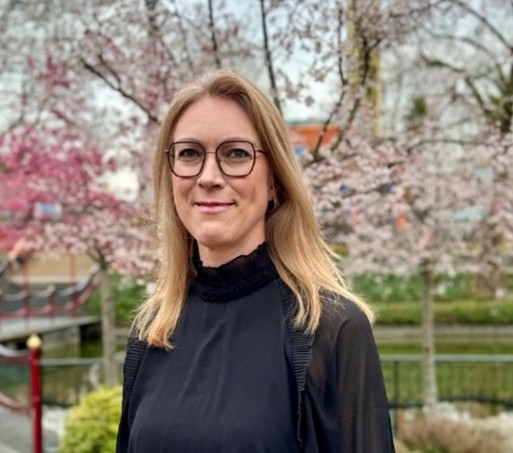
Dr. Chalotte Glintborg is Associate Professor of Rehabilitation Psychology, and Research Manager, at Aalborg University, Denmark. With a background in psychology and extensive experience in mental health rehabilitation, she was among the key figures behind the implementation of recovery-oriented rehabilitation in social psychiatry and vulnerable adult services in Aarhus Municipality, where she also served as a certified CARe instructor from 2007. Her research has centred on developing recovery-oriented rehabilitation as a field in Denmark across disabilities and has employed a variety of qualitative, quantitative, and mixed methods approaches in her work.
After forced departure due to conflict, violence, persecution, and/or human rights violations, and the necessary trials to reach a safe country, refugees often face a prolonged period of uncertainty before they have clarity about whether and where they can rebuild their lives. Coping with these disruptive experiences and the resulting social vulnerability requires time and effort from both the refugee and their community. Previous research shows that the integration and participation of people with a refugee background becomes more difficult, the longer the uncertainty surrounding the asylum process lasts.
Not being able or permitted to fully participate in society negatively impacts the well-being of the individual and society as a whole. The ‘Plan Einstein’ program in Utrecht offers an innovative approach to the reception and integration of refugees, aimed at promoting participation and inclusion from the moment of arrival. Several asylum seekers’ centres in Utrecht and beyond have now been designed according to the principles of Plan Einstein, where residents can participate in a wide range of activities in a safe environment, focusing on personal development and social interaction with neighbours. This relational approach shares many similarities with the CARe approach, supporting recovery and inclusion (Wilken & Den Hollander, 2024).
This session will explore how these two approaches can complement and strengthen each other to build more resilient and inclusive communities.
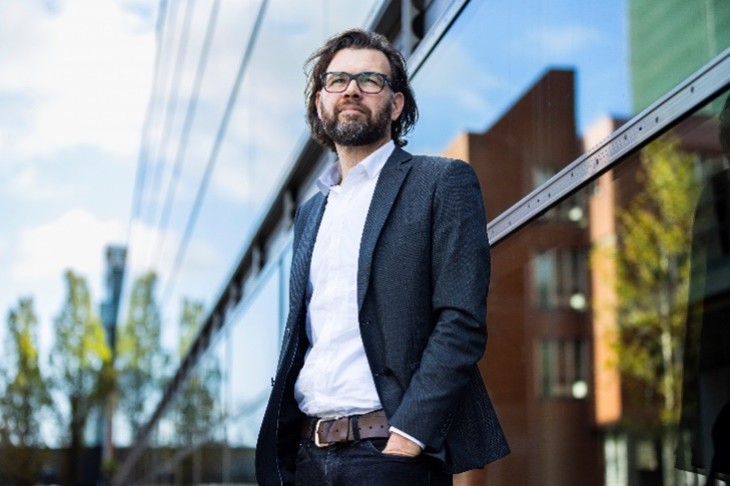
Dr. Leendert de Bell is professor for sustainable labour participation of vulnerable groups, in particular refugees, at HU University of Applied Sciences Utrecht, and is academic staff member at the Centre for Entrepreneurship at Utrecht University. His research focuses on issues related to inclusive employment, social entrepreneurship, and international migration.
For people with severe mental vulnerability residing in supported housing settings, finding and maintaining paid or unpaid work remains challenging. Nevertheless, many studies have shown that paid employment or other forms of participation can positively affect physical and mental well-being and support the recovery process. Together with a supported housing organization (both sheltered and inpatient) in Utrecht, The Netherlands, we studied how job coaches support their clients in motivating them to find paid work or other meaningful forms of participation. These trajectories are guided by a recovery-oriented approach. Using Self-Determination Theory (SDT) as a framework, we investigated the experiences of clients, job coaches, and the organization’s supervisors to understand the underlying mechanisms that help people find and maintain decent work that supports mental well-being and recovery. SDT shares several similarities with recovery-oriented practices, as both are based on nearly identical motivational concepts.
Our findings underline the importance of investing in a strong working alliance between professionals and their clients. Throughout the trajectory, job coaches aim to establish an egalitarian relationship with their clients — that is, a personal-professional relationship in which clients feel ‘seen’ and at ease (Wilken, 2010). This requires attention to topics beyond work-related issues. By doing so, job coaches can build trust, giving clients the space to grow, strengthen themselves, and increase their autonomy (ibid). These principles show strong similarities with the CARe methodology, which also emphasizes personal recovery, connection, and empowerment (Wilken & Den Hollander, 2025). We also found that, despite the current attention in both academia and professional practice for helping people with severe mental vulnerability secure paid work, other forms of participation should not be overlooked. In line with previous studies, we found that sheltered work, work in social firms, peer work, or voluntary work can also contribute meaningfully to the recovery process.
This oral presentation will further explore the mechanisms we identified that support people with severe mental vulnerability in moving towards paid work or other forms of participation as a means to support their recovery.
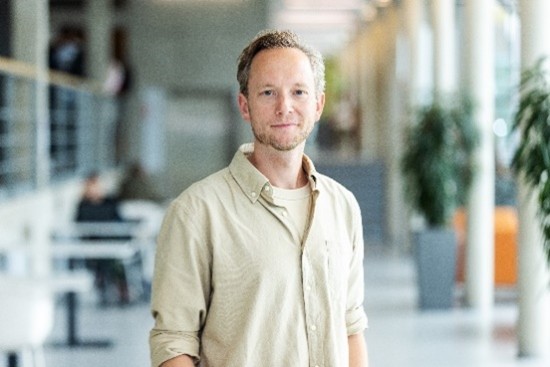
Joep Binkhorst is a researcher at the Knowledge Centre for Social Innovation at Utrecht University of Applied Sciences. His research focuses on improving (integrated) collaboration within the social domain between professionals, between organizations, and in partnership with local government. As a PhD candidate, he investigates how public service providers can collaborate more effectively to support individuals with a vulnerable position in the labour market in finding and maintaining employment. A specific part of his research focuses on people with severe mental vulnerability, exploring the underlying mechanisms that help them move towards paid work or other meaningful forms of participation as a way to support their recovery.
This workshop will explore the different levels for integrating experiential knowledge in education and practice from a ‘Gap Mending’ approach. This approach integrates a pedagogical idea that people need to step out of dichotomous categories, such as ‘social workers’ ‘service users’, to close the division which maintains people in roles as ‘expert’ professional and person ‘being helped’ with the problem. Research will be shared on the benefits of substantive mutual learning and how boundaries can be transcended through sharing experiential knowledge. Most significantly, outcomes of the research demonstrate how transformation is achievable when those who feel most marginalised and stigmatised initiate the agenda. Interaction is encouraged in this workshop to explore different levels of gap mending and promote innovative responses to mental health recovery education, such as:
• The inclusion of marginalized groups to ensure mental health education is underpinned by diverse perspectives.
• The use of narrative strategies to embrace lived experiences (among students and professionals)
• The development of community and joint action
• The involvement of ‘experts by experience’ or ‘peer supporters within the academia, bridging gaps between professionals and marginalized groups.
Workshop co-facilitators (Dr Helen Casey and Dr Cecilia Heule) are international co-ordinators for PowerUs, an established network since 2012 working with Higher Education Institutions and community partner organisations in over 20 countries , who engage in Gap Mending practices. https://powerus.eu/“
Cecilia Heule is a researcher and a teacher at Lund University, Sweden. Within the so-called Mobilisation courses, she and colleagues have developed gap-mending strategies and pedagogy since 2005. In 2011 she initiated the international network PowerUs. Her research focuses on gap-mending principles, service user inclusion, experiential knowledge and co-production.
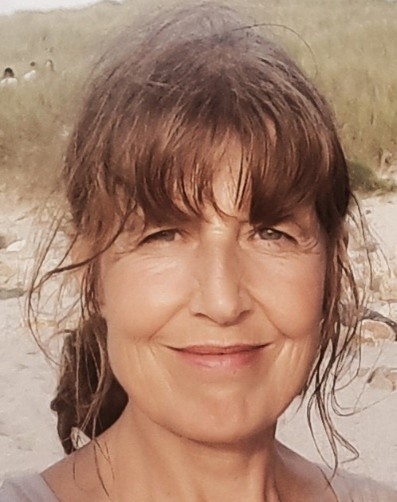
Helen Casey is Associate Head of School for Social Work at The Open University (OU). As a social worker, Helen worked mostly with adults with learning disabilities, seeking to establish the innovative support people wanted in the community. As an educator Helen is committed to co-producing the social work curriculum with those with lived experiences of discrimination and oppression. Helen introduced mend the Gap into social work in Northeast England in 2014 and is an international co-ordinator with PowerUs.
12.45 – 14.00 lunch break
14.30 – 15.45 2nd round of parallel sessions
Simona Karbouniaris PhD is Professor of Mental Health Care at Leiden University of Applied Sciences,
Netherlands, where she leads the research group Mental Health Care in close collaboration with
Mental Health Service provider GGZ Rivierduinen. Her work focuses on recovery-oriented, trauma-
sensitive and network-based mental health care, with a strong emphasis on proximity, relational
safety and the meaningful integration of experiential knowledge in practice, education and research.
Trained as a social scientist and drawing on her own lived experience, Karbouniaris has spent more than two decades working at the intersection of mental health practice, higher education and practice-based research. She is actively involved in national and international research collaborations, including European projects on youth mental health and resilience.
Part 1: Shaping Our Lives, a good practice example of a user movement promoting recovery focused mental health, advocacy, peer support and empowerment.
Shaping Our Lives is a non-profit organisation in the United Kingdom, specialising in inclusive involvement, ensuring the voices of those facing the biggest barriers are heard. We work with people and organisations to make sure people with lived experience are listened to. Formed as a user-led project in 1996, we now have a large membership of over 1000 individuals and organisations in our inclusive involvement community. Shaping our Lives works with people, especially those facing the biggest barriers, to build better more inclusive services and support. Shaping our Lives draws on the knowledge and expertise of our national network of service users and user-led organisations. We know about the current issues and barriers faced by people who experience inequalities, and we know what works. Shaping Our Lives provides tools and services for: People who want to have a say in their health and social care services and organisations that want to involve people and their experiential knowledge.
Part 2: Using Experiential Knowledge: The Affirmation Model, Outsider Art and Arthur Schopenhauer
The affirmation model has its roots in ideas emerging in the (UK) Disability Arts movement in the 1980s and 1990s: ideas involving people with physical, sensory, intellectual and emotional impairments coming together to develop their own narratives, identifying disability as oppression rather than as something ‘wrong’ with them. Disability, they argued, involved exclusion from and marginalisation and stigmatisation within ordinary community life because of the ways impairment was regarded – regardless of impairment type – and it was for people similarly oppressed to come together to oppose oppression through campaigning and other political and cultural activity. Disability Art is about transgression, resistance and audacity. It is about disabled people refusing to be who we are required to be within mainstream cultures in which conformity, sameness and normal standardisation are approved. It is about affirming the right to be different. Disability Art does not deny the reality of impairment or impairment effects, and it acknowledges that living with impairment can be messy, painful, exhausting, limiting. It is not about disabled people – people with experience of emotional distress, or physical or sensory impairments, or learning difficulties – jumping up and down going “Isn’t it wonderful being disabled!” But it is about clarifying that impairment is something that can teach important lessons about existence, and that we have a right for our differences to be expected, respected and included. It establishes that, contrary to taken-for-granted social expectations and assumptions, there is much to be gained from the experience of impairment. We like being who we are, and do not spend our lives uselessly wishing things were otherwise. As a disabled artist, a Stuckist artist and an Outsider artist, my (absurd) art engages thoroughly with these issues. It engages with issues of disability, oppression, normalcy and the absurdity involved in expectations of normalcy. I have been exhibited and have had paintings sold at the Royal Academy and at Christie’s in London, at Disability Arts Online and at Outside In, and at galleries and pubs around the Northeast of England, where I live. My work draws heavily not just on Disability Studies theory – my academic career has involved writing many book chapters and journal articles on the affirmation model – but also on the 19th Century philosophy of Arthur Schopenhauer. Schopenhauer’s key insight was that life is suffering. This is something many disabled people understand and accept but that, often, non-disabled people (including many ‘helping professionals’) try to deny or ignore, pretending that suffering is something only ‘other people’ – like disabled people – do, is something to be avoided and overcome. In my presentation I’d like to open up this discussion and argue that sometimes valuing experiential knowledge means facing uncomfortable truths.
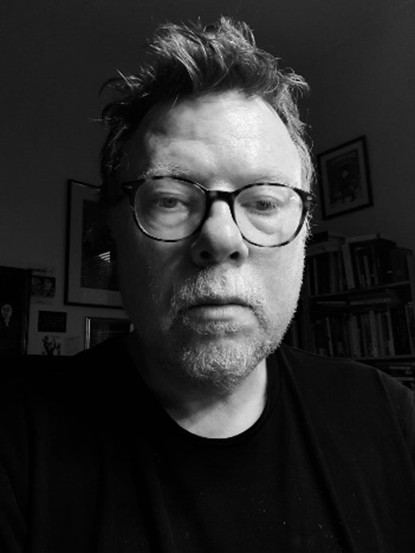
Dr. Colin Cameron is a disabled activist academic. He is an assistant professor at Northumbria University, Newcastle upon Tyne, UK, where he teaches sociology and philosophy on the BA (Hons) Guidance and Counselling degree and supervises PhD projects in Disability Studies. He has had many articles and chapters published about the affirmation model and a few about the gap mending approach. He is a director of Shaping Our Lives (the UK national campaigning network of service users), an executive editor of the international journal Disability & Society, a member of the PowerUs network, and an ambassador for Outside In (the Outsider artists’ organisation), He is a Stuckist artist who has had absurd paintings exhibited at the Royal Academy, and the lyricist/vocalist in a not very successful Whitley Bay punk band. He co-authored several chapters in the Routledge Handbook of Service User Involvement.
In this interactive workshop, participants will be introduced to Recovery Oriented Leadership: a values-based approach that places hope, meaning, and lived experience at the heart of leadership practice. Through engaging and experiential work formats, participants will explore leadership grounded in personal and participants will leave with new perspectives on leadership that supports recovery, collaboration, and sustainable change, starting with themselves. The workshop is based on the Erasmus+ Recovery Oriented Leadership module, a training programme that has already been completed by more than 30 leaders from various European countries. Drawing on these international experiences, the session offers both practical insights and space for reflection, dialogue, and mutual learning organizational values, co-creation, and the use of experiential knowledge.
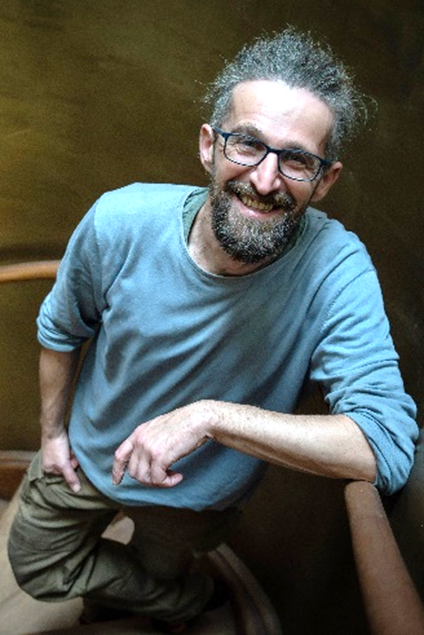
Martin Halíř is a clinical psychologist. After finishing his master’s degree studies in Psychology, he started his career as a clinical psychologist at the Psychiatric Clinic of Faculty Hospital. He went through all the wards and got the state certification in the subject Clinical Psychology and successfully finished his training in Gestalt Psychotherapy. In 2005, he became a member of the management of a local NGO providing social services in the mental health area. Being a project manager, step director, and director responsible for the services he accompanied the growth of the organization, which exceeded two regions and reached more than 100 employees, and started to provide health services. Nowadays, he works in a FACT team again as a psychologist. During his career, he acted as a teacher of Medical Psychology at the University, a lecturer of many courses with the topics of psychotherapeutic approach in different services and management, mainly value-driven management and self-organizing approaches.
Daantje Daniels holds a master’s degree in social work and works as Director of Care and Quality at Jan Arends, a care institution active within the social domain. Daantje Daniels specializes in working with a complex target group struggling with extensive and usually chronic issues across multiple life domains, including addiction. She worked in addiction care for over 20 years as a socio-therapist, treatment provider, quality supervisor, and care manager.
In addition to her work as director, Daantje is active as a senior researcher and is affiliated with the Mental Health and Society Research Group. The Mental Health and Society Research Group conducts practice-based research into the connection between mental health care and society. They do this primarily through participatory action and design research in collaboration with local and regional stakeholders. In this context, experiential knowledge serves as a fully-fledged source of knowledge, alongside scientific and professional sources.
Daantje Daniels is also active as a supervisor in healthcare and is a trained expert by experience. Her experiential knowledge is rooted in trauma and addiction. She explicitly incorporates her expertise based on her experience into all her work. In addition, she is a member of the advisory board of the national Association of Experts by Experience. She gives lectures, conducts workshops, and writes articles. In her work, Daantje focuses primarily on themes surrounding equality, substantive improvements within care and welfare, recovery-oriented care, and the use of expertise by experience.
This workshop introduces Textile Therapy, writing practice, and sensory approaches. Gentle, sensory-based practice invites participants to explore self-awareness, emotions, and personal needs through the textures, colours, and symbolic resonance of fabrics.
The workshop structure includes:
– A short grounding exercise;
– Choosing a piece of fabric guided by sensory and emotional resonance;
– A series of reflective writing prompts (10-15 open-ended questions);
– A closing circle for sharing insights and meaning-making.
This approach helps participants reconnect with the present moment, explore emotional needs through sensory experience, and strengthen self-awareness – offers both personal exploration and a practical tool for closer connection.
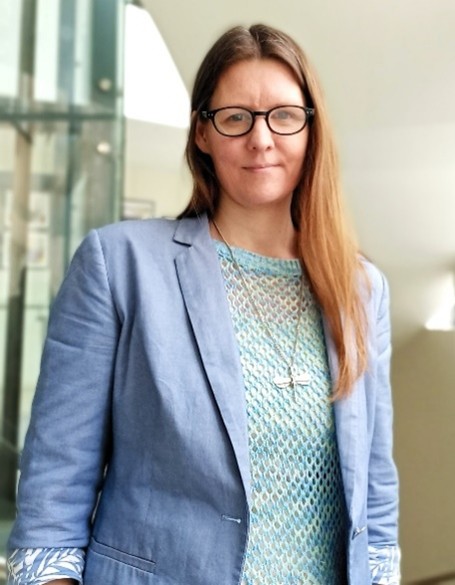
Ramunė Klumbytė-Abromaitienė
Ramunė Klumbytė-Abromaitienė is an occupational therapist in the field of mental health at Vilnius City Mental Health Center, Lithuania. In her practice, she facilitates textile workshops and bibliotherapy sessions aimed at supporting self-awareness, emotional expression, and recovery-oriented processes. Her work integrates individual support and group-based creative practices.
She is a member of the Lithuanian Bibliotherapy Association and leads a book club, bringing together literature, dialogue, and reflective practice.
Alongside her professional work, she enjoys exploring creative methods, handicrafts, reading, spending time in nature, and traveling.
Session 2.4 Workshop: Nonviolent Communication and the 4 Core Acts of the CARe Model – Stronger Together (Jacquelin Zents) (Workshop room 2, capacity 16 participants)
In this workshop, you’ll discover how Nonviolent Communication (NVC) and the four core acts: connecting, understanding, ensuring, and empowering — strengthen each other in everyday practice. By combining the four CARe core acts — connecting, understanding, ensuring, and empowering — with Nonviolent Communication (NVC), you create guidance that is both structured and deeply human. The core acts provide direction and focus, while NVC fosters empathy, respect, and genuine connection. Together, they form a powerful foundation for recovery-oriented care — one that helps clients take charge of their own process.
Developed by Marshall Rosenberg, NVC emphasizes empathy and awareness through the metaphor of the jackal and the giraffe: the jackal represents judgment and control, the giraffe stands for compassionate listening and strength. Reflecting on how you use both approaches helps you and your colleagues offer care that truly supports recovery — professionally and from the heart.
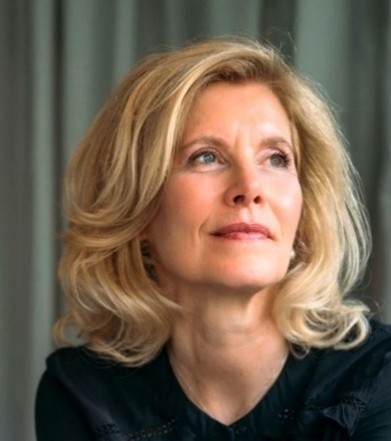
Jacquelin Zents isHead Trainer of the CARe Model at the RINO Group, a national post-graduate training centre. She leads a large team of CARe trainers. Annually, hundreds of professionals and experts-by-experience are trained in the CARe methodology in The Netherlands and Flandres, as well as CARe coaches and CARe trainers. She is also a mindfulness trainer and coach.
15.45 – 16.15 coffee/tea/water break
16.15 – 17.15 ‘We are all experts’ round tables. Round tables allow to ask questions, to share experiences and to deepen understanding.
Parallel session 1. Mike Slade (U.K.): recovery-oriented services and initiatives, how to create and adapt these to your local situation (Main hall, capacity – unlimited)
Parallel session 2. Alie Weerman and Leonie de Quelerij (The Netherlands): developing and working with experiential knowledge (Workshop room 1, capacity 25 participants)
Parallel session 3. Michal Kašpar (Czech Republic) and Dirk den Hollander (The Netherlands): working with peer support and self-help (Workshop room 3, capacity 25 participants)
Parallel session 4. Simona Karbouniaris (The Netherlands) and Nino Makhashvili (Georgia): recovery-oriented trauma-sensitive care (Workshop room 2, capacity 20 participants)
We look forward to seeing you from 7:00 PM at Mlsná kavka café (Sokolovská 29, Prague 8).
Mlsná kavka is a social enterprise and a training café supporting people with experience with mental illness. You can expect a friendly evening with music throughout, good company, and space to connect in an informal atmosphere. There will also be guitars available for anyone who feels like playing or singing, feel free to bring your favourite songs, maybe even some from your home country and share them with others.
Please arrange your own dinner beforehand. Light catering and snacks will be provided throughout the evening, and drinks will be available at your own expense.
How to get there: You can take the Metro Red line (Line C) from I.P. Pavlova to the Florenc stop. The venue is located just a few meters away on foot.
We are looking forward to spending a warm and enjoyable evening together.
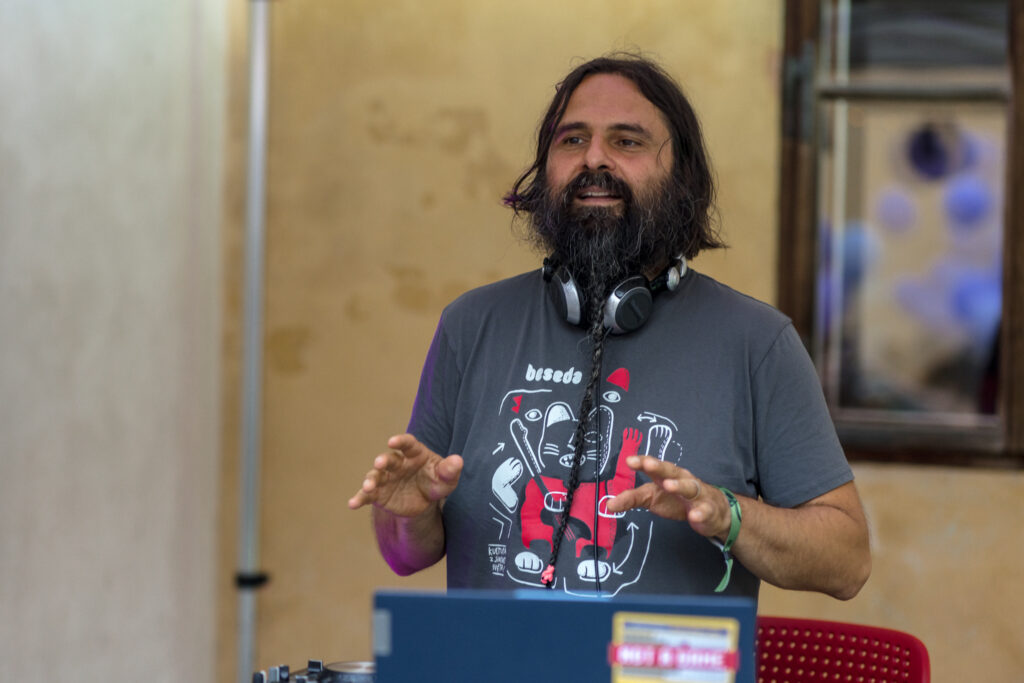
Throughout the evening, you can enjoy a music by our colleague and friend Jan Kostečka a.k.a. DJ cube positive.
After turning forty, it was time to kickstart a parallel career in a brand-new field. Becoming a DJ turned out to be an achievable goal. It
sparked a full-blown obsession with fresh music, steady rhythms, and powerful vocal and rap lines. And here it is: tracks you probably don’t know yet, but definitely should love. Joy, melody, and beat. Archive for listening: https://www.mixcloud.com/Honza_K/